Overview
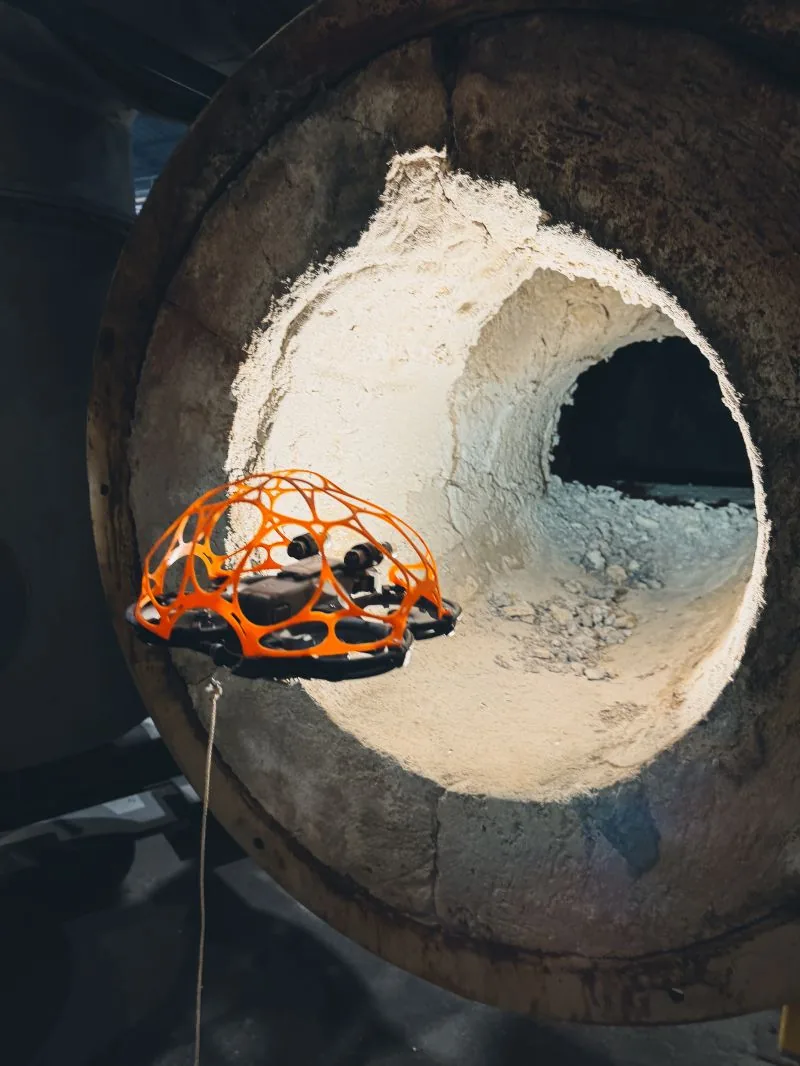
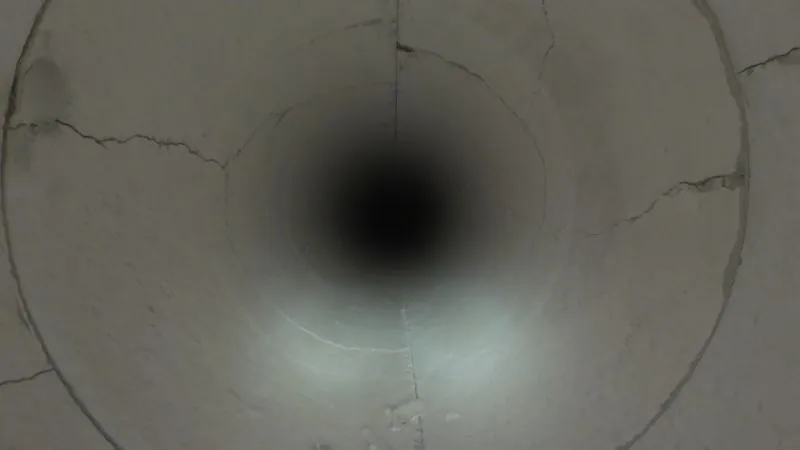
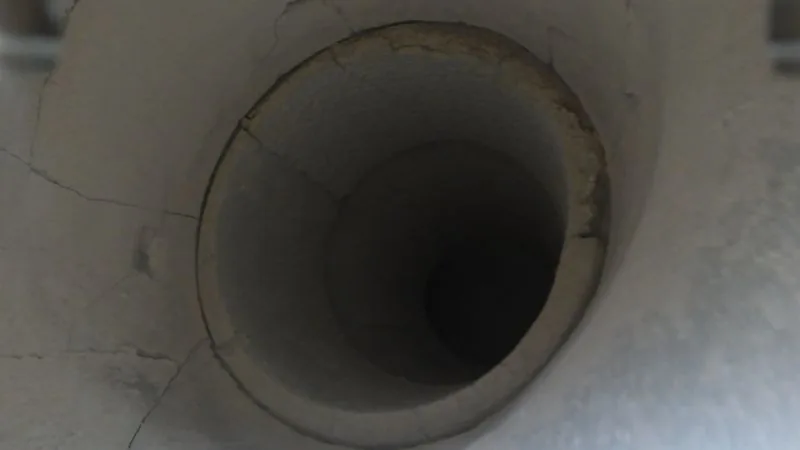
Osprey Inspection ran a confined-space drone inspection of an internal heater ventilation pipe: 600–800 mm diameter, 30–40 metres of run. We documented the duct surface without putting anyone inside it, so there was no confined-space-entry risk, no service shutdown and no need for external scaffold access. A collision-tolerant inspection drone flew the full length under its own lighting, capturing the duct wall, joints and burner-end residue in one continuous pass. What's usually a permit-heavy entry job turned into a short remote survey.
Scope
- Internal duct surface — corrosion, deposit build-up, coating breakdown and structural condition
- Joint and seam condition between duct sections
- Burner-end soot and combustion-residue distribution
- Debris and obstruction build-up that could affect airflow
- Confirmation of duct geometry and continuity along the full 30–40 m run
Deliverables
Annotated visual inspection report with timestamped imagery, defect register with severity classification, and prioritised maintenance recommendations. Findings tied to position along the pipeline run.
600–800
mm Pipe Diameter
30–40
Metres Inspected
0
Personnel Entries