← All Services
Confined Space
Confined Space
Inspection
Drone inspection of tanks, vessels, pipes and enclosed structures. No personnel entry, no scaffolding, no dewatering.
Request a Quote
Drone inspection of tanks, vessels, pipes and enclosed structures. No personnel entry, no scaffolding, no dewatering.
Request a QuoteTell us about the asset, atmosphere category and scope. We usually reply within one business day.
Drone inspection of tanks, vessels, silos, pipes and enclosed structures. We get full internal coverage without confined space entry permits, ventilation cycles or putting anyone at risk.
Collision-tolerant inspection drones operate in tight spaces; ATEX-zone work follows the asset owner's atmosphere and permit procedure.
4K video and high-resolution imagery for corrosion, coating, weld and structural condition assessment.
Eliminates the entire confined-space-entry chain: permit, atmosphere check, rescue standby, ventilation.
Reports cross reference findings to NS 415 / VT-2 visual inspection categories.
Nobody goes inside the asset. That's the highest-risk step in tank inspection, and it's simply not needed.
Operations in ATEX-classified zones follow the asset owner's atmosphere and permit-to-work procedure.
High-resolution video and stills of welds, plate condition, coating and structural details.
Skip the ventilation cycle and the permit lead-time. Inspection wraps up in hours, not days.
Pilots hold NS 415 visual inspection certification, so reports get accepted by class and insurance without pushback.
Engineers and inspectors watch the live feed from outside the asset and make coverage calls on the spot.
Internal inspection of crude, fuel and chemical storage tanks: shell plate corrosion and pitting, weld condition, roof plates and floating roof seals, bottom plate and sump, internal stiffeners and ladders, nozzle and manway faces, coating breakdown. See a tank inspection project →
Process vessels, separators, scrubbers — internal condition without breaking insulation or confinement.
Material storage silos — wall condition, residue mapping, structural assessment.
Hot-side inspection of refractory linings, tube banks, burner assemblies.
Large-diameter piping, manifolds and headers where access for personnel is impractical.
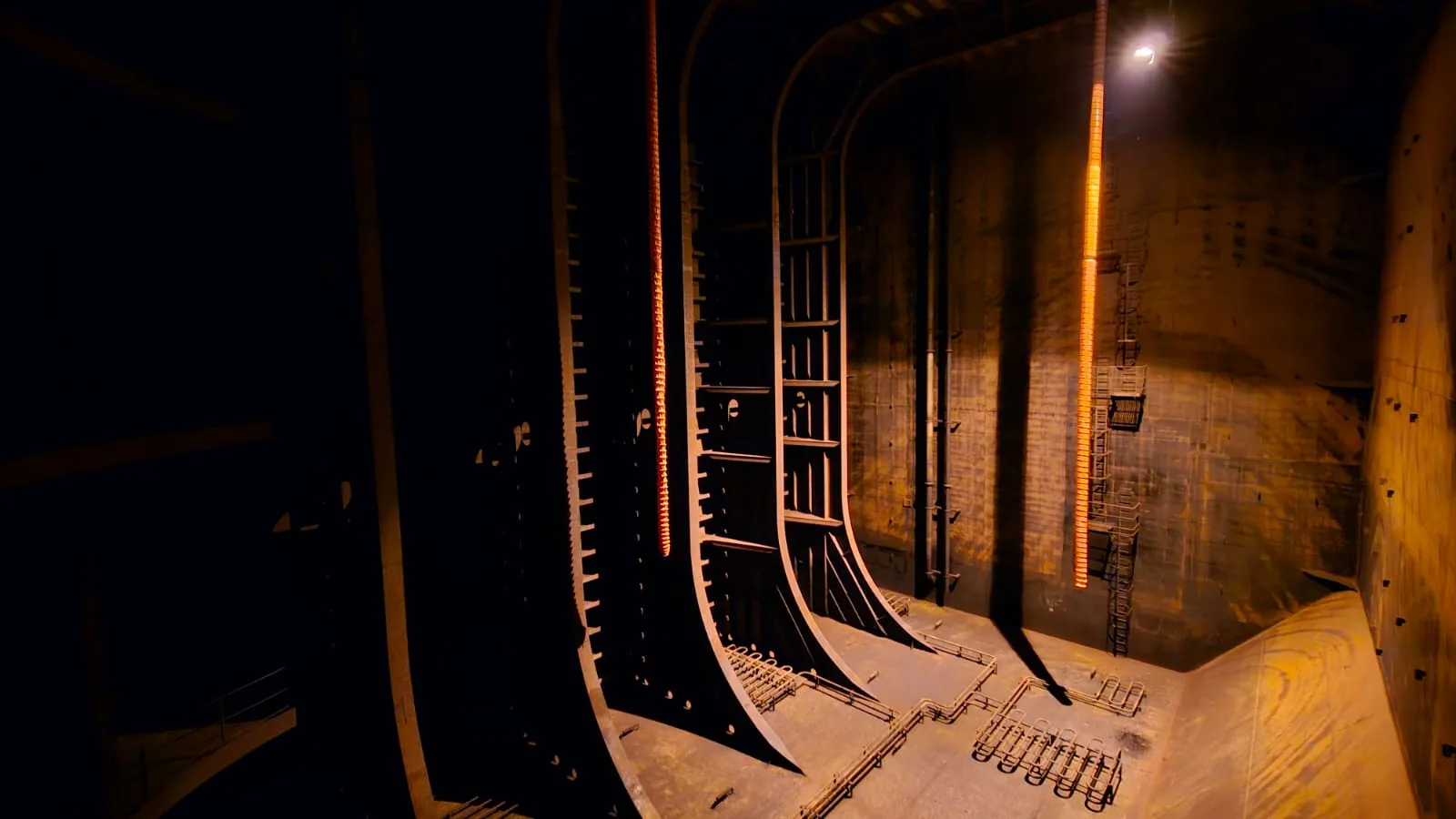
Marine cargo holds, ballast tanks and bunker tanks, surveyed internally to class-compliant standard.
Tank inspection with a drone is an internal visual survey of a storage tank, vessel or silo flown by a collision-tolerant drone instead of personnel entering the tank. It covers shell plates, welds, the roof and floating roof seal, bottom plate and sump, internal stiffeners, and nozzle or manway faces, without gas-freeing the asset for entry or building scaffolding inside it.
Confined-space entry is one of the highest-risk activities in industrial work: H₂S exposure, oxygen depletion, fall and rescue scenarios. Drone inspection skips the entry chain entirely. No permit, no atmosphere check, no rescue standby, no ventilation cycle. Inspection wraps up in hours rather than days.
At an industrial site in Norway, we inspected an internal heater ventilation duct, 600-800mm in diameter and running 30-40 metres. A collision-tolerant drone flew the full run in a single continuous pass under its own lighting, documenting duct wall condition, joints and combustion residue at the burner end. No entry permit, no shutdown, no scaffolding. Read the full project →
No drone is ATEX-certified. We deploy collision-tolerant confined space drones, and operations in classified zones follow the asset owner's atmosphere control and permit-to-work procedure. Typically the asset is gas-freed, ventilated and atmosphere-verified before the drone goes in.
Yes. Collision-tolerant drones with omnidirectional protection get into tight internal geometry, tank tops, plate joints, support beams and bottom plate included. Lighting and 4K imaging cover every surface.
Inspection methodology follows NS 415 visual inspection, VT-2 category. Pilots hold NS 415 inspector certification, and reports are formatted for direct ingest into class society and insurance review.
Tell us the asset type, atmosphere category and inspection scope. We'll quote based on size and access requirements.