← All Services
Solar Panel
Solar Panel
Inspection
Aerial thermal inspection of solar parks and rooftop arrays. We find defective cells, hot spots and underperforming diodes in hours, not days.
Request an Inspection
Aerial thermal inspection of solar parks and rooftop arrays. We find defective cells, hot spots and underperforming diodes in hours, not days.
Request an InspectionDrone solar inspection covers a full utility-scale park in hours, not days. Thermal imaging picks up defective cells, hot spots, bypass diode failures and soiling down to panel level.
High-resolution thermal cameras (DJI Zenmuse H30T or M30T, plus FLIR) detect temperature anomalies down to ±2°C accuracy across thousands of panels per flight.
Inspections follow IEC 62446-3, the international standard for outdoor thermal inspection of solar panels.
Defects get classified by severity (hot spots, bypass diode failures, microcracks, soiling, string-level losses) and go straight to your O&M team.
EASA Specific Category and BVLOS approval mean multi-park sweeps without per-flight authorisation.
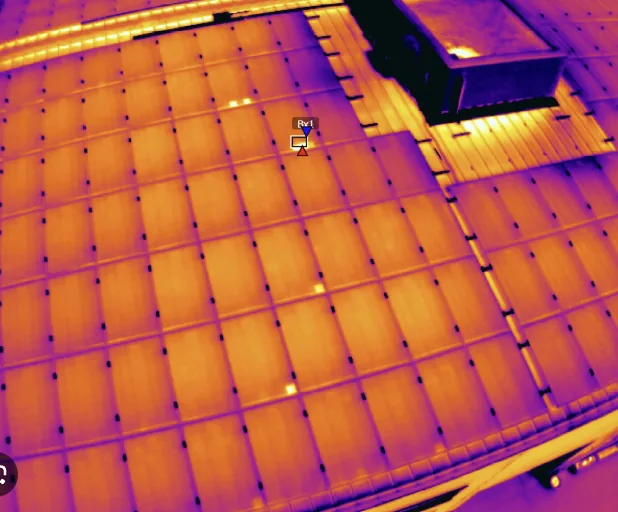
A 10 MW solar park is fully inspected in 2-4 hours. Manual inspection takes 5-10 days.
Radiometric thermal imaging quantifies the temperature delta, calibrated to catch cell-level failures.
Each panel is individually georeferenced, so defect maps trace straight back to inverter and string position.
Methodology aligns with international standard for PV thermographic inspection.
Identifying 1-2% of underperforming panels typically pays back inspection cost within months.
Annual or quarterly campaigns track degradation trends and feed performance modelling and warranty claims.
Full thermographic survey of 1-100+ MW solar farms, georeferenced defect maps, prioritised remediation list.
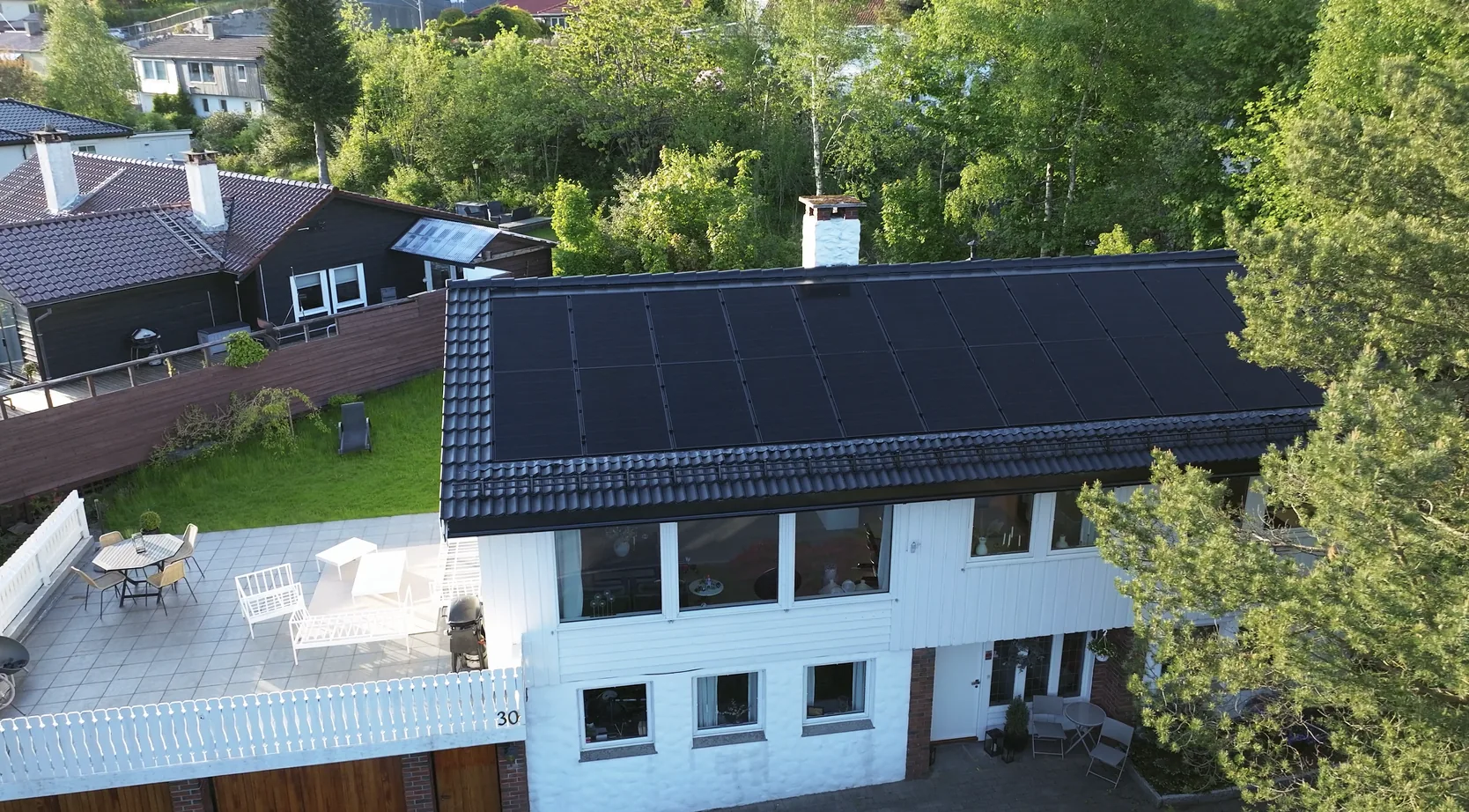
Industrial and commercial PV rooftops — fast thermal flyover identifies hot spots without scaffolding access.
Drone inspection of floating photovoltaic installations, useful where boat access is slow.
Rapid post-event survey to identify physical and electrical damage before insurance claims.
New installation acceptance survey — verify no defects exist before warranty period begins.
Recurring inspection to track degradation, validate string outputs and flag warranty-relevant defects.
A drone with a thermal camera covers a 10 MW solar park in 2-4 hours; manual inspection with a handheld thermal camera takes 5-10 days. Drone inspection is also safer (no roof or ground walking) and produces georeferenced defect maps that link each issue to inverter, string and panel position.
Hot spots (cell-level overheating), bypass diode failures, potential induced degradation (PID), string-level disconnections, microcracks (when combined with EL imaging), soiling patterns, and shading interference. Each defect is classified by severity per IEC 62446-3.
We use radiometric thermal cameras (FLIR / DJI Zenmuse H30T/M30T) with ±2°C absolute accuracy and ≤0.05°C resolution. Combined with controlled flight altitude and meteorological conditions, this is sensitive enough to detect single-cell failures.
Both. You receive a structured defect register (CSV/Excel) with GPS coordinates, severity classification, and panel/string mapping, plus annotated thermal imagery, plus an executive summary with prioritised remediation. Optional: orthomosaic of the entire park overlaid with defects.
Tell us the system size, location and timing. We'll scope the survey, recommend optimal flight conditions, and quote based on per-MW pricing.