Services Projects About Contact Plan an inspection
← All Services
ThermalIR ImagingLevel II

Thermography
Inspection

ISO 9712 Level II thermography for electrical, mechanical and building-envelope inspection — find faults before they fail.

Request a Quote
What We Do

Find Faults Before They Fail

Thermography reveals temperature anomalies that signal failing electrical connections, friction in rotating equipment, water ingress in insulation, and heat loss in building envelopes — long before failure becomes visible.

ISO 9712 Level II certified inspectors interpret thermal imagery against context, load and environment.

Radiometric thermal cameras (FLIR, DJI Zenmuse H30T/M30T) — ±2°C absolute accuracy, 0.05°C resolution.

Aerial thermography for solar parks, wind turbines and roof envelopes; handheld for switchgear and process.

Reports include thermograms, RGB context, severity classification and prioritised remediation.
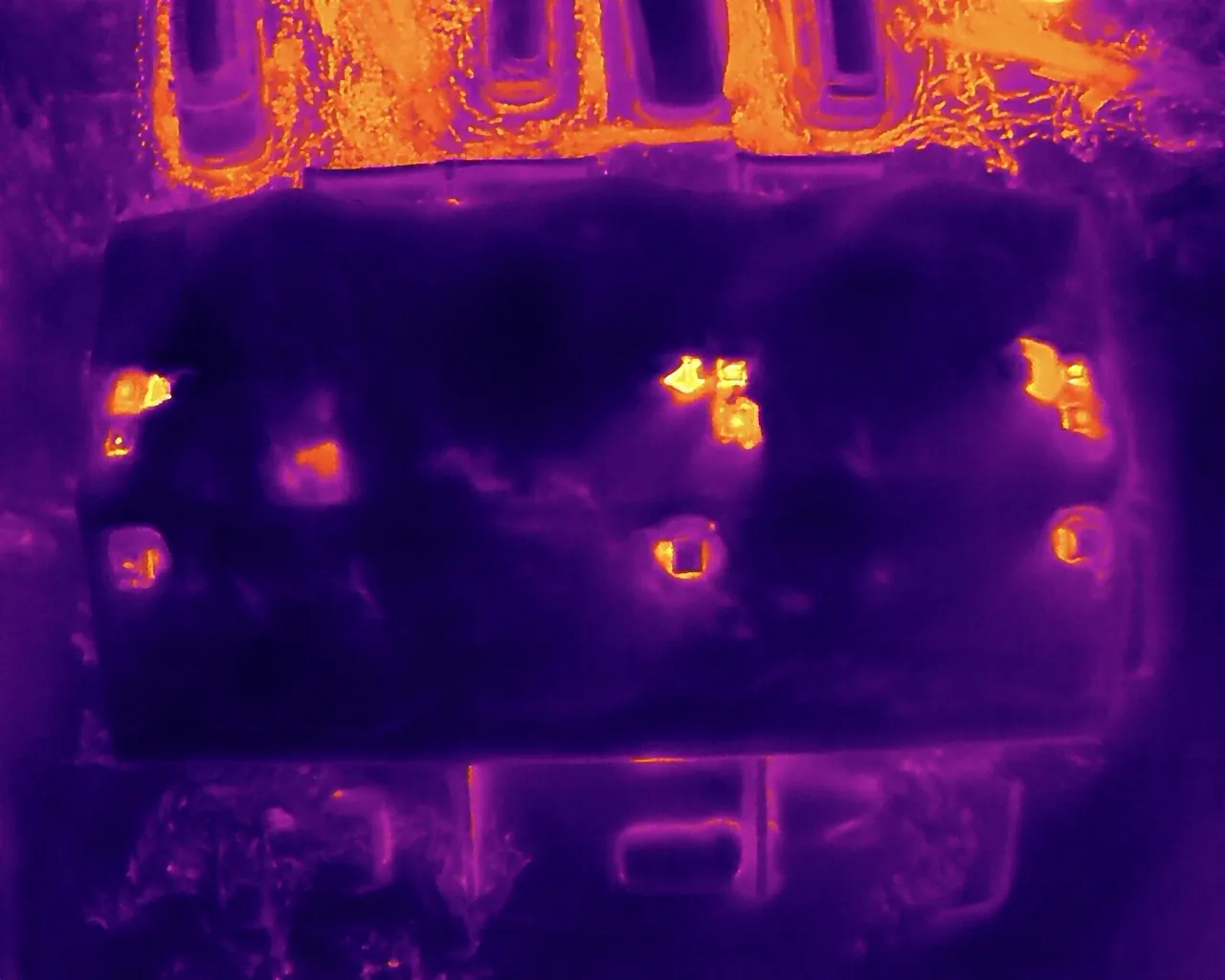
Aerial drone thermography of a building — heat-loss anomalies visible from infrared imagery
Key Benefits

Why It Matters

Level II

ISO 9712

Certified inspectors — reports accepted by insurance and class.

±2°C

Thermal Accuracy

Radiometric calibration enables absolute temperature reporting, not just relative.

Pre-empt

30–50% Downtime Reduction

Detect failing components before they fail — schedule repair, avoid unplanned outage.

Aerial

Drone + Thermal

DJI Zenmuse H30T captures thermal + RGB simultaneously from the air.

Field

Handheld

FLIR T-series for switchgear, motors, process equipment and insulation.

Trend

Repeat Surveys

Annual thermal baselines tracked over time — trending temperature drift catches slow failure.

Value Delivered

What clients save

30–50% downtime reduction
Pre-emptive defect detection
Find faults before they fail
Hours vs. days
Aerial vs. handheld
Cover entire asset in one flight
ISO 9712 Level II
Certified inspectors
Reports accepted by insurance & class

Indicative figures based on typical engagements — actuals depend on scope, asset and access constraints.

Applications

Where We Deploy

01

Electrical Switchgear

MV/LV switchboards, busbars, transformers — find loose connections and overloaded circuits.

02

Solar PV Arrays

Hot spots, bypass diode failures, soiling — see our solar inspection service.

03

Rotating Equipment

Bearings, pumps, motors — friction and lubrication issues show as temperature anomalies.

04

Building Envelopes

Heat loss, water ingress, insulation gaps — both internal and aerial surveys.

05

Refractory & Furnaces

External shell thermography reveals hot spots indicating refractory degradation.

06

Steam & Hot Process

Steam traps, insulation, lagging condition — energy loss quantified.

Common Questions

FAQ

What level of certification do your inspectors hold?

Our thermographers are certified to ISO 9712 Level II — the international standard for non-destructive testing personnel. This means inspection results are accepted by insurance, class societies and major operators without rework.

What's the difference between drone and handheld thermography?

Drone thermography covers large areas (solar parks, wind farms, roofs, large facades) rapidly and from above. Handheld thermography is used for switchgear, motors, process equipment — anywhere close-range high-resolution thermal imagery is needed.

Are your thermal cameras calibrated?

Yes. Cameras are radiometrically calibrated with traceable certificates. ±2°C absolute accuracy, 0.05°C thermal resolution. Temperature readings are absolute, not relative.

What deliverables come with a thermography inspection?

Thermograms with RGB context, anomaly severity classification per ISO 9712, location/equipment-specific findings, and prioritised remediation recommendations. Optional: trend analysis against prior surveys.

Thermography inspection coming up?

Tell us the asset type and inspection objectives — we'll match the right thermal system and quote based on coverage scope.